Short Overview
ToggleA grease port is a small entry point that lets grease reach a part inside a machine. It may look like a tiny metal nipple, but it has an important job: helping grease reach a bearing or joint without taking the whole machine apart. Before using one, though, check the machine’s manual. The right port, grease and amount depend on the equipment.
What Is a Grease Port?
A grease port is an opening or access point made for adding lubricant to a machine. In many common designs, a small fitting sits in the port. A grease gun connects to that fitting and pushes grease through a passage to the part that needs it. Not every machine has one, and not every bearing should be greased by hand.
- An entry point for lubricant
- Often found on bearing housings and moving joints
- Used only when the equipment instructions call for it
People sometimes use “grease port” to mean the whole fitting. Technically, it helps to separate the parts: the port is the opening or place on the machine, and the fitting is the small connector attached there. In everyday speech, the names can overlap, so use the words shown in the maker’s manual.
Grease Port vs Grease Nipple
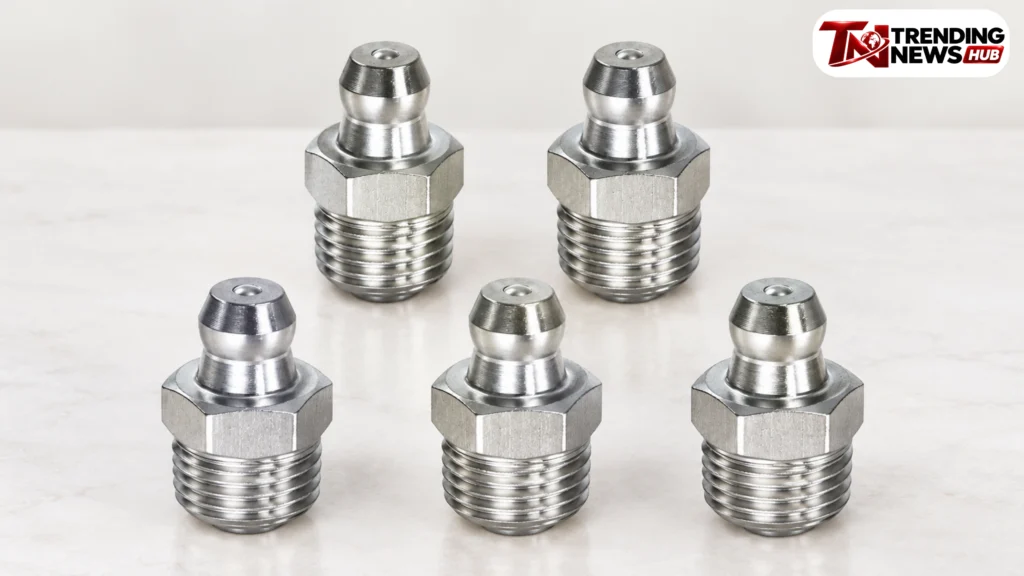
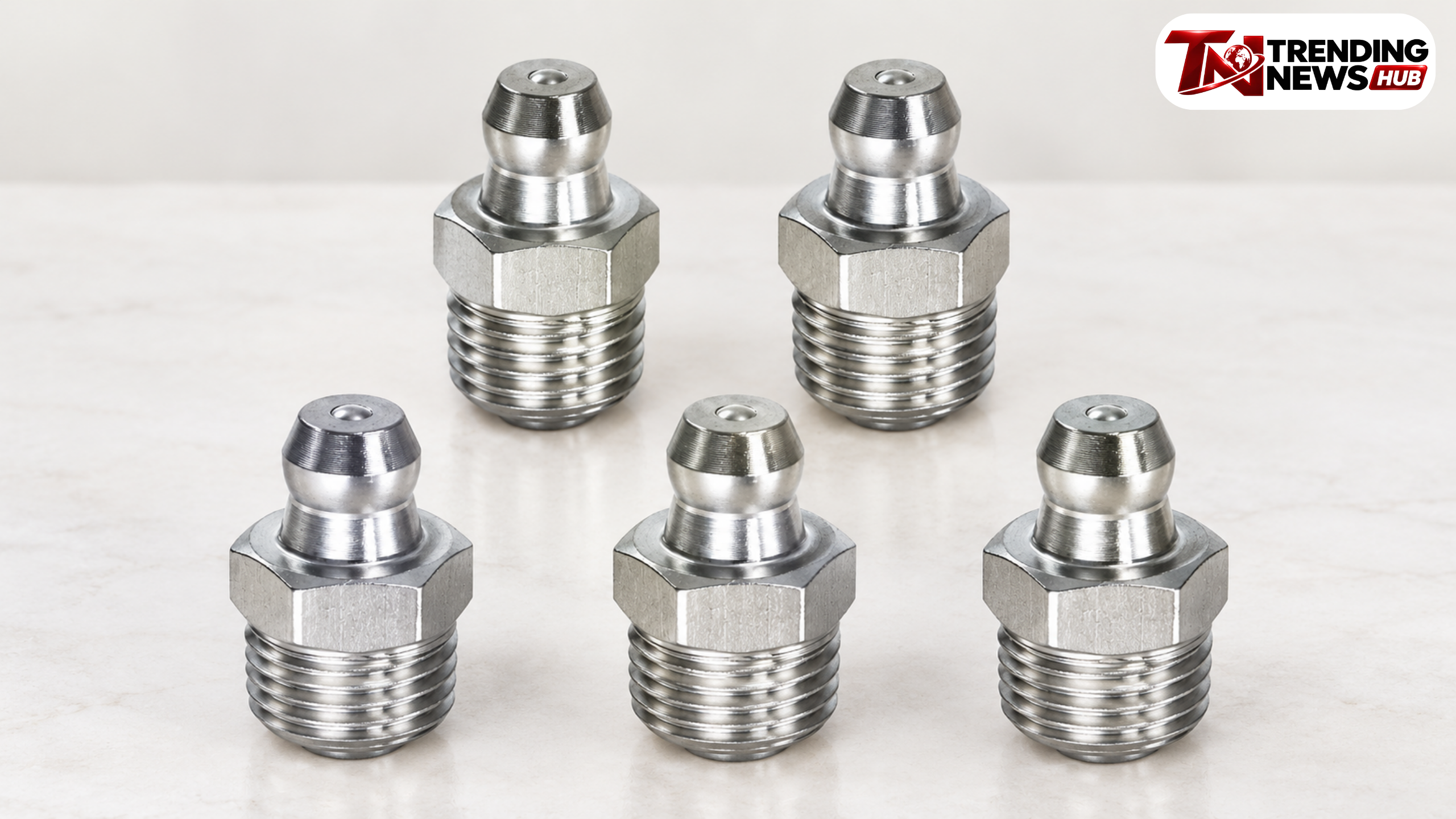
In the UK, a fitting used for adding grease is often called a grease nipple. “Grease fitting” is another common name, while “Zerk” or “Zerk fitting” is widely used in North America. These names often refer to the connector, not the opening in the machine. A grease gun attaches to the connector to deliver lubricant.rs-online+1
- Grease port means the access point on the machine
- Grease nipple means the connector fitted at that point
- Grease fitting is another common name for the connector
- Grease gun is the tool used to add grease
A common nipple-style fitting has a small spring-loaded ball inside it. Pressure from a suitable grease gun pushes the ball in, opening a path for grease. When pressure stops, the spring pushes the ball back into place. This check-valve design helps prevent grease flowing back out, but it does not make a dirty fitting safe to use.
Where Can You Find a Grease Port?
Grease ports can be found on equipment with parts designed for periodic greasing, such as some bearing housings, pivots and joints. Their exact location depends on the design. A fitting may face outwards, sit at an angle or connect to a remote line. Never assume that every similar-looking point is a grease port; a nearby plug or opening may serve another purpose.
- Look for a marked lubrication point
- Check the machine or bearing diagram
- Use the model number to find the correct manual
- Ask a trained technician if the point is unclear
Some bearings are sealed or made to work without regular greasing. Other bearings can be relubricated, but only in a particular way. Even two parts that look alike may have different instructions. The manual is more reliable than appearance alone, so use it to confirm both the port location and whether the part should be greased.
How a Grease Port Works
A grease port gives grease a route into a machine part. With a common nipple-style fitting, the grease gun’s coupler seals against the fitting. As grease is pumped, pressure moves the small ball inside the fitting and lets grease pass through a narrow channel. When pumping ends, the ball returns to its seat. The route beyond the fitting depends on the machine’s design.
- The gun connects to the fitting
- Pressure opens the fitting’s small valve
- Grease travels through a passage into the part
- The valve closes when pressure stops
The fitting is only one part of the lubrication system. Grease still has to reach the right place and spread as intended. A blockage, wrong fitting, unsuitable grease or incorrect amount can prevent proper lubrication or harm seals. If grease will not go in easily, do not treat stronger pumping as the answer.
What to Check Before Greasing
Before connecting a grease gun, find the equipment maker’s instructions for that exact machine or bearing. Check the specified lubricant, amount, service interval and method. Also confirm that the point is meant to be greased and that the gun coupler fits the fitting. These checks matter because grease requirements differ between products and uses.
- Confirm the correct lubrication point
- Use the grease named by the manufacturer
- Check the required quantity and schedule
- Inspect the fitting and gun for dirt or damage
- Follow the machine’s safety instructions
Do not rely on a rule such as “one pump for every fitting.” Grease guns can deliver different amounts, and bearings need different quantities. Some equipment must be stopped before service; other procedures specify a particular operating condition. Follow the manual, isolate the machine when required, and keep hands clear of moving parts.
How to Use a Grease Port
The steps below explain the general idea, not a universal service procedure. Use the equipment manual whenever it gives a different method. For certain SKF roller bearing units, the instructions say to clean the fitting and surrounding area first, introduce grease while the shaft rotates slowly, and avoid excess grease or pressure that could damage seals. Those details apply to the specified units, not automatically to every machine.
- Read the manual and confirm the lubrication point
- Clean the fitting and the area around it
- Check that the grease and coupler are correct
- Attach the coupler firmly and in line with the fitting
- Apply only the amount and method the manual gives
- Stop if grease will not enter or a leak appears
- Wipe away excess grease and close any cap or cover
Video Guide
Cleanliness matters. Dirt on the fitting or gun coupler can be carried into the machine with the grease. Use a clean cloth and keep the gun nozzle clean. Do not use high-pressure washing on a fitting unless the equipment maker says it is safe; water or debris forced into the area can create a new problem.
Grease Fitting Types
Fittings come in different shapes and designs. A straight fitting may be easy to reach in an open area, while an angled one can help where access is tight. Button-head and flush fittings have different connection styles, and remote fittings use a line to move the access point. These are examples, not a guide to choosing a replacement. The fitting must match the machine’s thread and design.waltervalves+1
- Straight fittings for direct access
- Angled fittings for restricted spaces
- Button-head fittings for a matching coupler
- Flush fittings that sit close to the surface
- Remote fittings connected by a line
Do not buy a fitting based only on its appearance or a size found in a general online chart. Thread standards and dimensions vary. A fitting that seems close may damage the port or fail to seal. Check the part number, technical drawing or manufacturer’s advice before replacing one.
What If the Grease Port Is Blocked?
A fitting may be blocked, damaged or dirty if the grease gun will not deliver grease. The problem may also be farther inside the passage or joint. Graco identifies contamination and grease separation as possible causes of clogged fittings and advises users to follow the equipment maker’s instructions. Stop if the gun meets strong resistance; forcing grease can damage seals or equipment.
- Stop pumping if grease does not flow
- Wipe the outside of the fitting clean
- Check the manual for approved inspection steps
- Use the correct replacement for a damaged fitting
- Ask a qualified technician if the cause is unclear
Avoid trying heat, drills, solvents or very high pressure as a quick fix. Those methods can damage seals, contaminate the lubricant or injure someone, and they are not suitable for every machine. If the manual does not explain how to clear the blockage, have a trained person inspect it rather than experimenting.
Common Greasing Mistakes
More grease does not always mean better lubrication. Too much can build up where it should not, raise pressure or damage a seal. Using the wrong grease can also cause problems, especially if it is mixed with the grease already inside. The correct amount and type come from the maker’s instructions, not from a general rule that applies to all bearings.
- Greasing a part without checking its manual
- Using an unknown or incompatible grease
- Pumping until the gun feels hard to press
- Leaving dirt on the fitting or coupler
- Assuming every bearing has a grease port
- Treating a fitting that looks similar as a match
A common source of confusion is the presence of a fitting. Its presence alone does not prove that any grease should be used, or that the part should be serviced in the same way as another one. Some equipment instructions may specify a different lubricant. Read the guidance for the exact model before adding anything.
Simple Grease Port Maintenance
Good maintenance starts with clean tools and correct information. Keep the fitting free of dirt, use a clean grease-gun coupler, and inspect the point for damage or leakage during scheduled service. Record the grease type and service date if the maintenance plan calls for it. Follow the maker’s interval instead of choosing one based on a generic online schedule.
- Keep fittings and couplers clean
- Use only the specified lubricant
- Follow the service interval in the manual
- Look for damage or grease leaks
- Keep a record when the service plan requires it
If the machine works in a dusty or wet place, do not guess how often it needs grease. Conditions can affect service intervals, but the correct change depends on the equipment. Ask the manufacturer or a maintenance professional when the manual does not cover the conditions in which the machine operates.
Frequently Asked Questions
Is a grease port the same as a grease nipple?
Not quite. A grease port is the access point on the machine. A grease nipple is usually the connector attached to it. People sometimes use the terms loosely, so check the manual to see which part it means.Sources
How do I find a grease port on a bearing?
Check the bearing or housing manual and its diagram. Look for the marked lubrication point, but do not rely on looks alone. Some bearings are sealed or do not need regular greasing.
Can I use any grease in a grease port?
No. Use the grease specified for the exact machine or bearing. Different greases may not be compatible, and the wrong product can affect performance or damage parts.
Why will my grease fitting not take grease?
It may be dirty, blocked, damaged or connected to a blocked passage. Stop pumping, clean the outside and follow the manual. Do not force the gun or try an unapproved repair.
How much grease should I add?
Use the quantity given in the equipment instructions. There is no single amount that works for every bearing or machine, and too much grease or pressure can damage some seals.
The Safest Way to Think About a Grease Port
A grease port is a route for lubricant, not a signal to pump grease into every machine. Find the correct point, use the specified grease and amount, keep the fitting clean, and follow the manual. If the port is blocked or the instructions are unclear, stop and ask a qualified person. That simple approach helps protect both the equipment and the person maintaining it.